
How to Choose a Business Strategy Consultant: Seven Questions to Ask First
Hiring a strategy consultant is a significant commitment. These seven questions separate advisers who will change your results from those who will simply produce a report.
Most leaders who search for a business strategy consultant are not short of ideas. They are short of clarity: which ideas deserve investment, which should be stopped, and how to move the organisation behind a single direction. The right adviser shortens that path. The wrong one adds another document to the shelf.
Before appointing anyone, including us, ask the following seven questions.
1. Can they state your problem more precisely than you can?
In a first conversation, a capable consultant should reframe your challenge in commercial terms — margin, market share, capability, risk — and identify the decision that actually needs to be made. If the discussion stays at the level of generic frameworks, expect generic output.
2. What evidence will they use?
Strategy built on opinion is fragile. Ask what data they will examine: customer behaviour, pricing, competitor movements, operational performance, search and market demand. At Lo Presti we combine financial and operational analysis with market intelligence and, where relevant, AI-assisted analysis of large data sets, so that recommendations can be defended in the boardroom.
3. Who will do the work?
Clarify who attends the meetings and who performs the analysis. A strategy engagement often needs several disciplines at once — commercial, marketing, technology, sometimes security or public-sector expertise. A multidisciplinary team avoids the blind spots of a single specialism.
4. How will implementation be handled?
The most common reason strategies fail is not poor analysis but weak execution. Ask how the adviser will translate recommendations into priorities, owners, budgets and timelines, and whether they can support delivery through project management or management consulting.
5. How will success be measured?
Agree measurable indicators at the start: revenue from a new segment, cost-to-serve, conversion rates, time to market. A consultant who resists defining outcomes is protecting themselves, not you.
6. How do they handle uncomfortable conclusions?
Good strategy sometimes means telling leadership that a favoured product, market or campaign should stop. Ask for an example of when the adviser delivered unwelcome advice and how it was received.
7. Is the engagement proportionate?
Not every organisation needs a six-month programme. Many benefit most from a focused diagnostic of four to six weeks, followed by a decision on whether further support is justified. Ask for a phased proposal with clear exit points.
What a well-run strategy engagement looks like
- Diagnostic: interviews, data review and market analysis to define the real decision.
- Options: a small number of realistic strategic choices, each with costs, risks and expected returns.
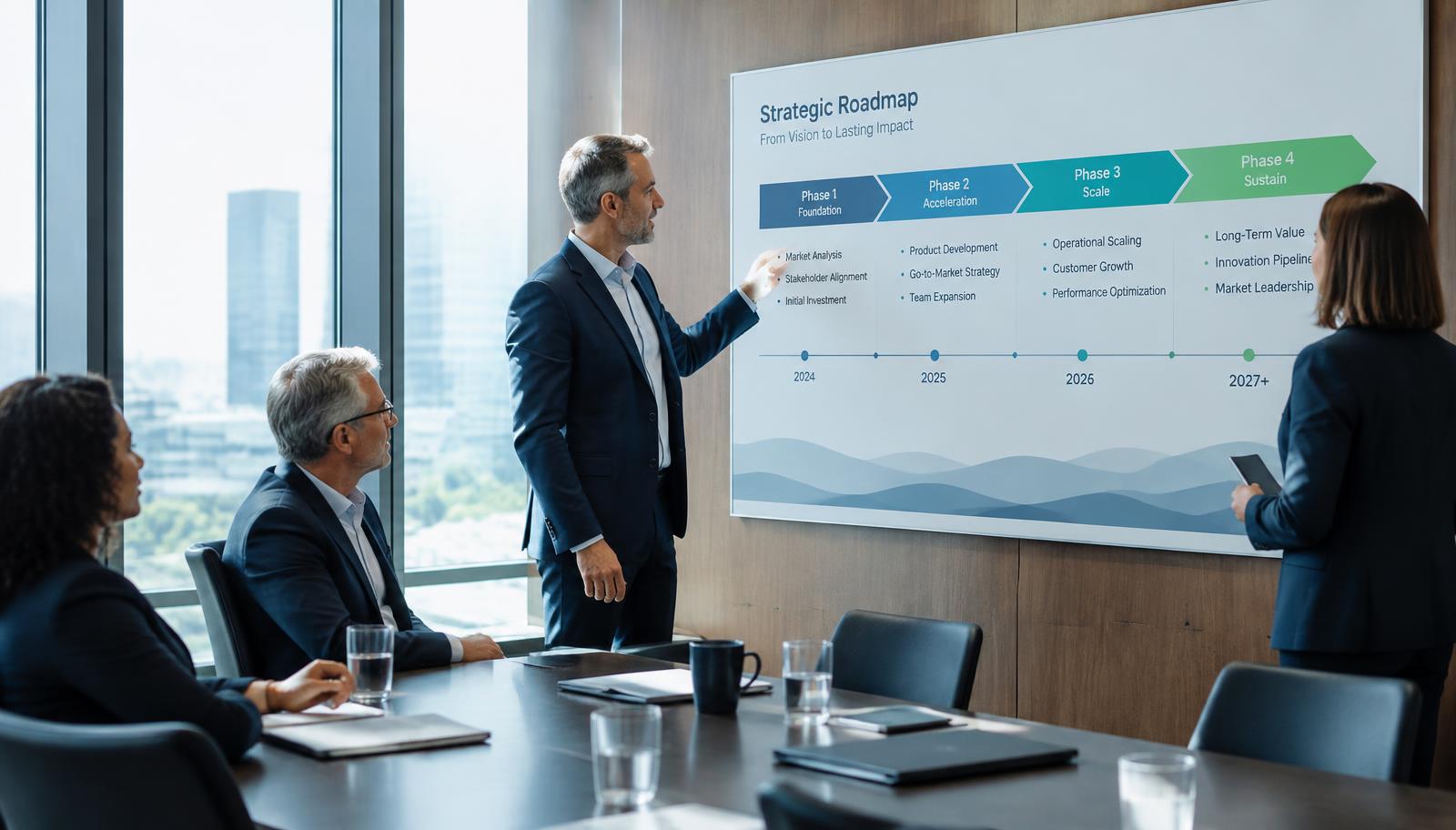
- Roadmap: priorities, ownership and a measurement framework.
- Delivery support: as much or as little as your team needs.
Next step
If this reflects a decision your organisation is facing, send us a short brief. Our team will reply with an honest view of whether we can help, the scope we would recommend and how we would measure progress. You can also read more about our Business & Strategy Consulting practice.